Eight Things to Ask About Dental Implants
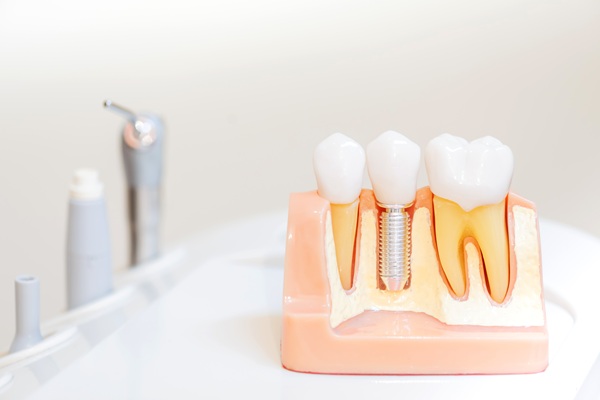
Dental Implants are metal rods or screws (typically titanium) that are inserted into gum tissues as a general dentistry procedure. They are combined with restorations like crowns, dentures, and bridges to replace missing teeth.
Implants help ward off the bone tissue loss that people with missing teeth can find themselves dealing with. The implant transfers bite forces into the jawbone, giving the tissues there the stimulation that they need to remain healthy.
Questions to ask about dental implants
Many patients are considering replacing one or more missing teeth with dental implants. Let us take a look at questions to ask the dentist first.
1. What does the process look like?
The procedure entails surgically placing the implant into bone tissues in the jaw. Local anesthetics are typically administered, so the patient does not feel pain as the dentist cuts into their jaw. A hole is made right where the replacement tooth will be placed, and the implant is then pushed into the hole.
Bone tissues surrounding the implant hold it in place in the same way that wood holds a nail in place. The implant then fuses with the bone tissues around it, making it stable in the mouth. The procedure ends with the dentist attaching a restoration to the implant.
2. How long do implants last?
Implants are created to last a lifetime with good oral hygiene. They are typically made out of titanium, one of the strongest metals in the world. They do not require any special maintenance, so they are easy to maintain. Brushing, flossing, and regular dental visits are necessary to get the most out of implants.
3. Are implants visible when I smile?
No, it is virtually impossible to tell when someone has implants. They are designed to look and feel just like natural teeth. The implant lies below the gums, so when a patient smiles, all people see is the restoration replacing the lost tooth. The only way to find out if a person has an implant is to use a radiograph to detect the metal in their mouth or simply ask them.
4. How do I maintain my implants?
It is the same process as maintaining natural teeth. Brush twice a day, floss once daily, and use mouthwash to clean areas that brushing and flossing miss. Mouthwash also reduces bacteria in the mouth, protecting the gum tissues surrounding the implant.
5. Are implants for anyone?
Implants require oral surgery, so there are eligibility requirements that anyone interested in implants must meet. These include:
- Patients should be healthy enough to recover from surgery; chronic conditions like diabetes can hinder recovery
- The patient’s jaw should be thick enough to hold an implant; bone grafts can be used to thicken a patient’s jaw
- The patient should be over 20 years old; implants are not recommended for people with developing jaws, like children and teenagers
6. What are the pros of getting implants?
Some of the benefits of getting dental implants include:
- Replacing lost teeth with implants prevents the remaining teeth from shifting out of alignment as they try to close the gap created by missing teeth
- Implants stimulate bone tissues in the jaw, keeping them healthy
- Implants are virtually as stable as real teeth
- The only way to tell if a person has an implant is to x-ray their mouth
- Implants restore the function and appearance of lost teeth
- Implants do not have any special maintenance requirements. Brushing and flossing is enough to keep them in excellent shape
7. What are implant-supported dentures?
Implant-supported dentures are hybrid oral prosthetics that combine the stability and bone preserving properties of implants with the affordability of dentures.
Implants are excellent for replacing individual teeth, but the costs can quickly get out of hand. Implants are the priciest way to restore missing teeth. A single implant often costs more than a full set of dentures.
Implant-supported dentures involve inserting multiple implants into each dental arch and using them as bases for artificial teeth. Implant-supported dentures can be removable or non-removable.
8. How long does the process of getting implants take?
It takes between three to six months to replace a lost tooth with an implant. However, same-day dental implants involve placing a restoration on the implant right after it is surgically placed in the jaw. The restoration is typically temporary, and it is removed after the implant has fused with the jaw and replaced with a permanent restoration.
Replace lost teeth with dental implants
Give us a call or stop by our Houston location to learn more about implants and other ways that our dentist can replace your missing teeth.
Request an appointment here: https://nwdentalhouston.com or call NW Dental at (713) 343-7231 for an appointment in our Houston office.
Check out what others are saying about our dental services on Yelp: Dental Implants in Houston, TX.
Related Posts
Dental veneers give patients a way to transform their smiles, providing benefits that reach far beyond whiter teeth in photos. A dentist can use these thin, custom shells to correct several concerns at once, from chips and gaps to worn edges and uneven color. So while many people think of veneers only as a cosmetic…
A cosmetic dentist specializes in enhancing the appearance of the teeth, gums, and smile through various treatments designed to improve both function and aesthetics. While general dentists provide essential care to maintain oral health, a cosmetic dentist focuses on cosmetic procedures that can transform the look of your smile. Visiting this professional offers several key…
Most dental patients do not set a dental checkup for a dental filling. It is either they are suffering from dental anxiety, or they do not see any holes in their teeth to fill. What may seem like a normal tooth may already need fillings. A dental checkup can determine if the patient needs a…
Many people want brighter teeth, a more even shape, or a fuller smile, but do not know how to achieve it. A smile makeover can help patients achieve each of these goals. These treatment plans blend art, science, and customization to create a healthy, confident smile that fits personal wants and needs. A general dentist…
